From walnut groves to the world's busiest GA field: a short history of SoCal's private airports
Van Nuys opened on a Wright-anniversary, Burbank has had seven names, Long Beach's terminal was postponed by Pearl Harbor, and Howard Hughes camped at Oxnard. The fields you charter from have stories.
The airports Southern California flies private from today mostly began as dirt strips, ranchland, and orchards — and the region's aviation history is written into them. If you're departing one of these fields, here's what happened on that ground first.
Van Nuys — carved out of the orchards
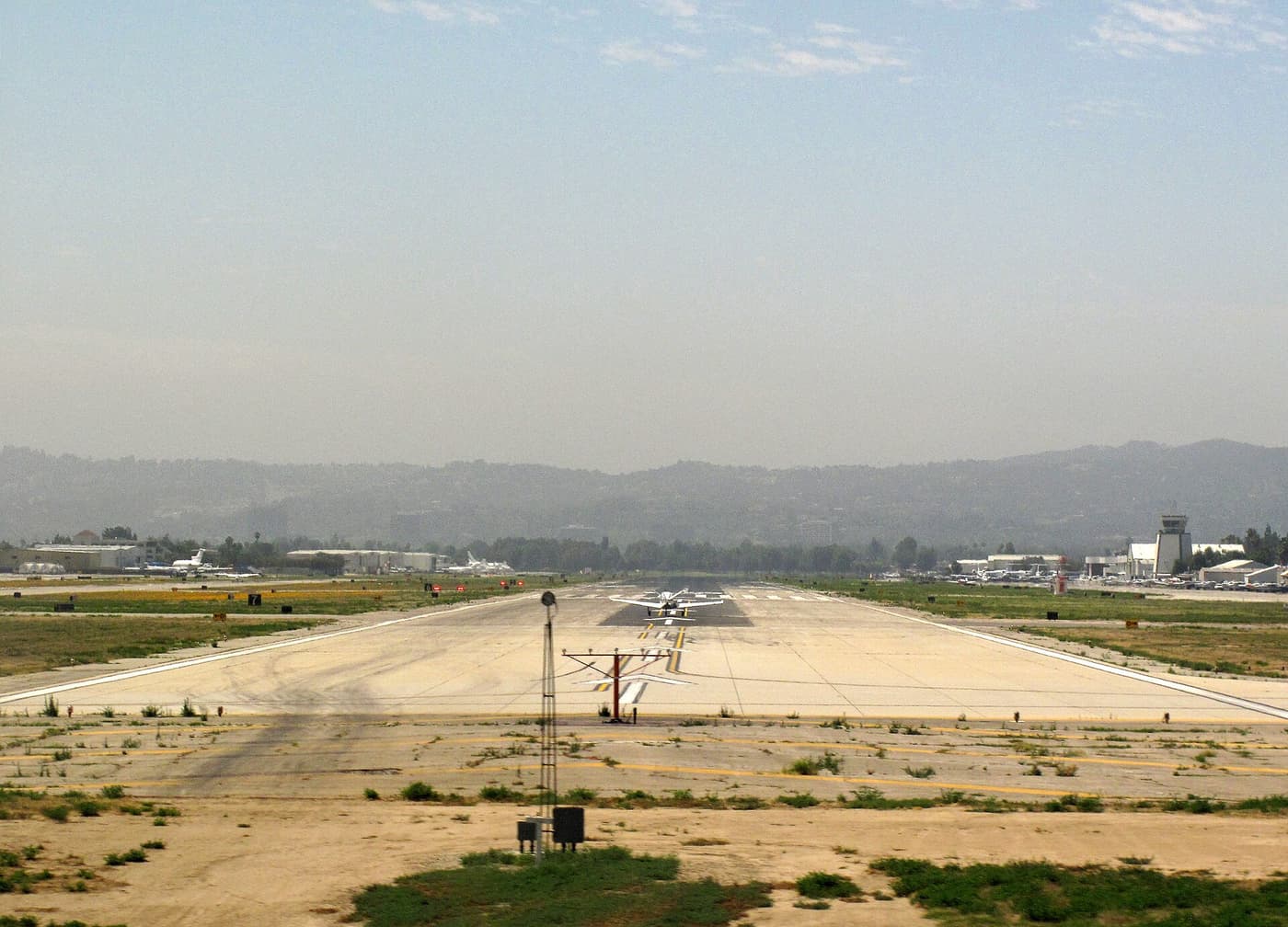
Van Nuys opened on December 17, 1928 — deliberately, the 25th anniversary of the Wright brothers' first flight — as the privately owned Metropolitan Airport, carved out of Valley walnut and peach groves. The military ran it as Van Nuys Army Airfield during World War II; it took its current name in 1949 and grew into the busiest general-aviation field in the country, a title it has traded but never strayed far from. Today it is the center of gravity for LA private flying.
Burbank — the airport of seven names
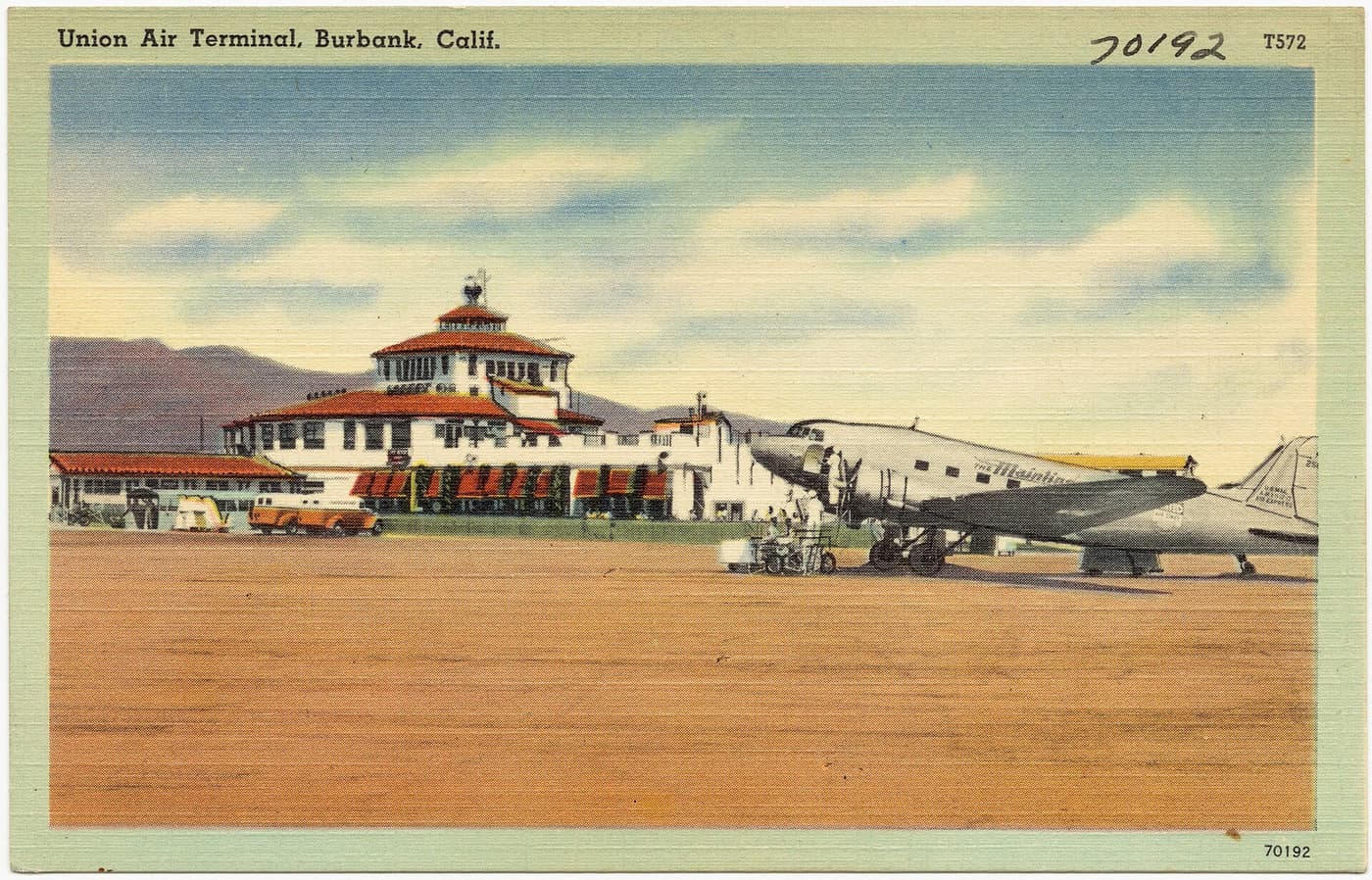
The field opened over Memorial Day weekend 1930 as United Airport, with a Spanish Revival terminal and an air show, and was for a time the largest commercial airport in the Los Angeles area — until LAX overtook it after 1946. Few American airports have been renamed as often: United Airport, Union Air Terminal, Lockheed Air Terminal, Hollywood-Burbank, Burbank-Glendale-Pasadena, Bob Hope, and today Hollywood Burbank. Lockheed built aircraft on the field through World War II.
Long Beach — the terminal Pearl Harbor postponed
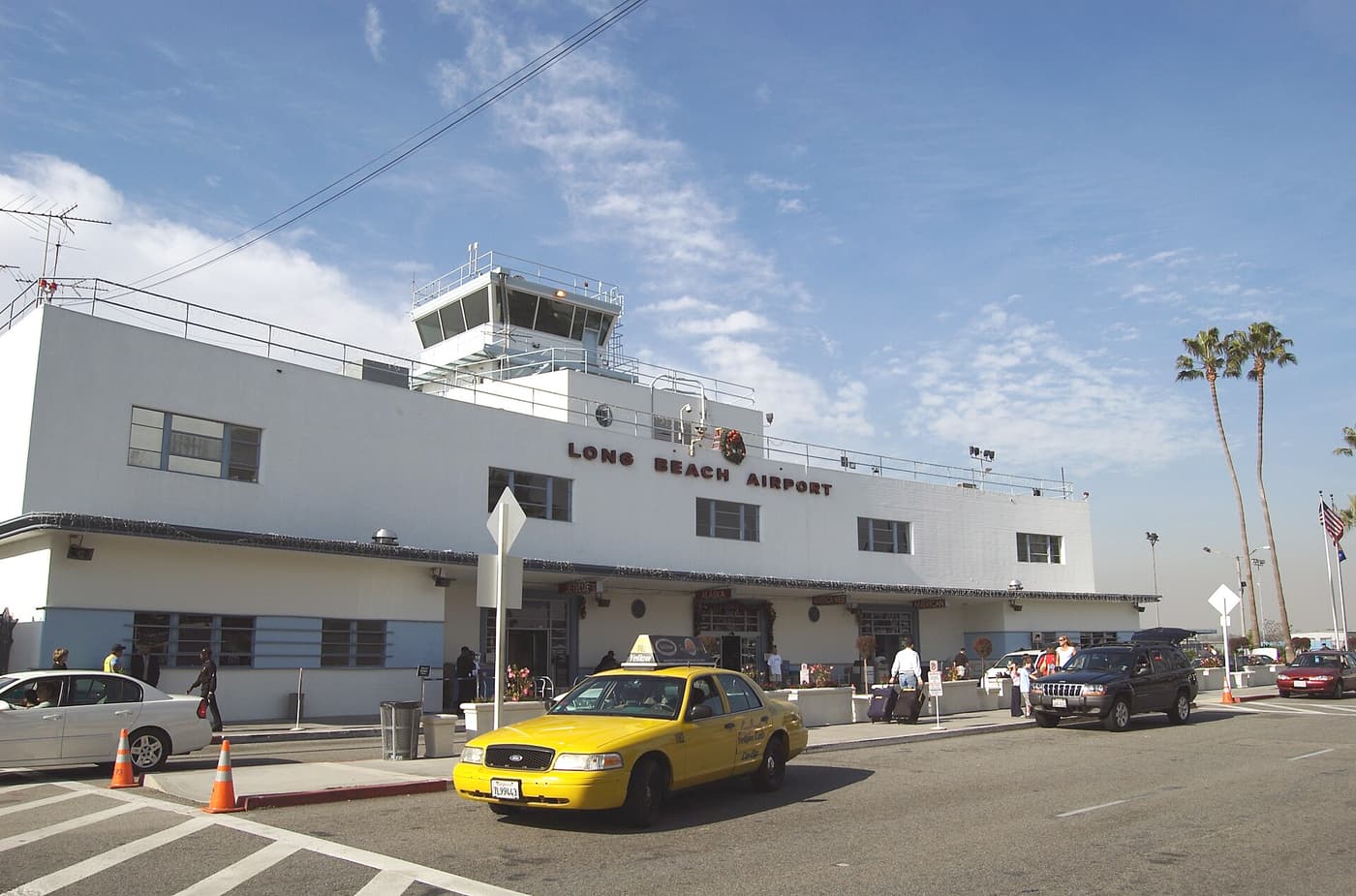
Ground broke in November 1923 on Daugherty Field — named for barnstormer Earl Daugherty, who ran one of the world's first flight schools here — making it Southern California's first municipal airport. Its Streamline Moderne terminal was set to open December 8, 1941; Pearl Harbor postponed the ceremony, and the building spent the war camouflaged and billeting soldiers before finally opening in 1942. Its WPA-era mosaics by Grace Clements — 1.6 million hand-cut tiles — are still in the building.
Oxnard — Howard Hughes's tent
Ventura County opened Oxnard in 1934 as a 3,500-foot dirt strip, and its best story is from those early years: Howard Hughes pitched a tent on the field to shelter his H-1 Racer — the aircraft he'd set the world landplane speed record in — and flew test flights off the dirt. The county paved the runway in 1938.
And the rest
John Wayne traces to 1923, when pioneer aviator Eddie Martin leased Irvine Company ranchland for a flying school; Orange County renamed the airport in 1979 for the movie star and Newport Beach resident who had died that year. Santa Barbara's Spanish Colonial terminal, commissioned by United Air Lines in 1942, remains one of the more beautiful places in California to catch a flight. And Palm Springs began in 1939 as an Army emergency landing strip on Agua Caliente Band of Cahuilla Indians land, chosen for the desert's famously clear flying weather.
Every one of these fields is a working private-aviation airport today — and where the region's empty legs depart from. The ground you board on has been doing this for a century.
FBOs, the private-terminal experience, and live deal activity per field.
Meet the fields as they are today →